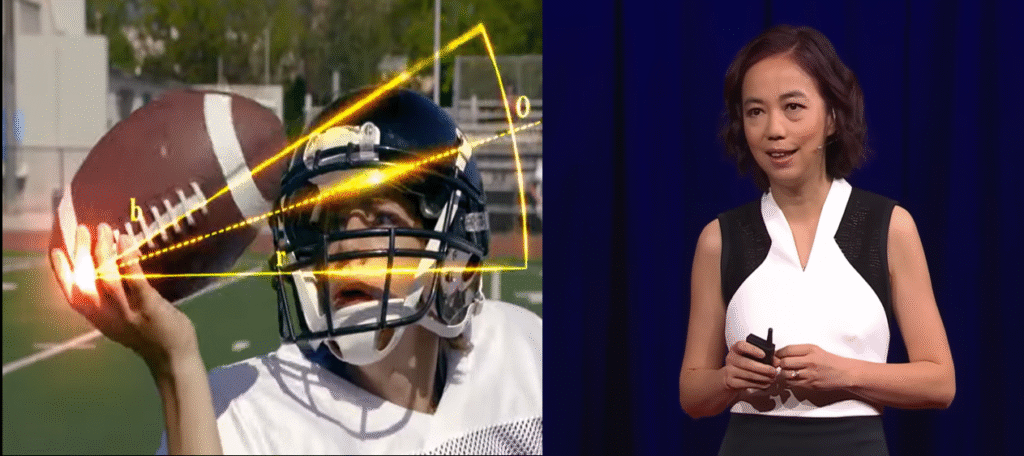
What is the TRUE spatial intelligence
1. In On the Fourfold Root, Schopenhauer argues:
“Objective perception makes use, properly speaking, of only two senses; touch and sight.”
This means:
- Touch gives us immediate spatial extension, solidity, resistance, and causal interaction — the ground of objectivity.
- Sight provides representations of spatial relations — form, distance, and arrangement — but depends on tactile experience to gain meaning (since vision alone is representational, not substantial).
Thus, for Schopenhauer, space and causality are not merely mental abstractions — they arise from bodily experience, from how we encounter resistance and shape through touch.
2. Link to Modern “Spatial Intelligence”
Howard Gardner’s spatial intelligence (in Frames of Mind, 1983) focuses on:
“The ability to perceive the visual-spatial world accurately and to perform transformations upon those perceptions.”
However, Gardner’s framework is vision-centric, largely ignoring tactile or embodied dimensions.
Modern cognitive science and robotics (e.g., embodied AI, sensorimotor learning, spatial cognition) now recognize that true spatial intelligence is multimodal, grounded in both visual and tactile / haptic experience — echoing Schopenhauer’s metaphysics.
3. Integrating Schopenhauer + Modern Science
If we merge Schopenhauer’s principle of sufficient reason (where perception is grounded in causal, spatial, and temporal relations) with embodied cognition, we can define spatial intelligence as something that arises from the active coupling of perception and action.
Hence, touch is not optional — it’s the epistemic foundation of spatial understanding.
4. A New Definition
Spatial Intelligence (Schopenhauer-Embodied Definition):
The capacity of a mind or system to construct, transform, and reason about the structure of space through the integration of sight and touch — where vision provides representational mapping of spatial relations, and touch provides causal and corporeal grounding of those relations.
In this view, spatial intelligence is not merely visual imagination but embodied spatial reasoning, emerging from the reciprocity between seeing and feeling, between representation and resistance.
5. Functional Implications (for AI / Robotics)
Extend this into AI or spatial robotics:
|
Sense |
Function |
Corresponding AI Capability |
|
Sight (Vision) |
Perception of form, distance, motion |
3D reconstruction, SLAM, visual scene understanding |
|
Touch (Haptics) |
Perception of resistance, texture, causality |
Force feedback, material recognition, manipulation learning |
|
Integration (Embodiment) |
Unification of visual and tactile representations into one coherent spatial model |
Multimodal fusion models, embodied spatial reasoning, predictive simulation |
So spatial intelligence framework would go beyond visual perception — it would be causal-spatial, embodied, and interactive, echoing Schopenhauer’s metaphysical insight through modern computational form.
Summary: A NEW Definition
Spatial Intelligence is the embodied synthesis of visual and tactile perception, enabling an agent to construct and reason about the spatial structure of reality through both representation (sight) and resistance (touch).